The Sims 2: The Definitive Life Simulation Experience
Two decades on, The Sims 2 remains the boldest, most emotionally intelligent entry in the franchise. From its revolutionary aspiration system to the sprawling modding ecosystem that still thrives today — this is your ultimate guide to the game that defined a generation.
1. A New Era for Life Simulation
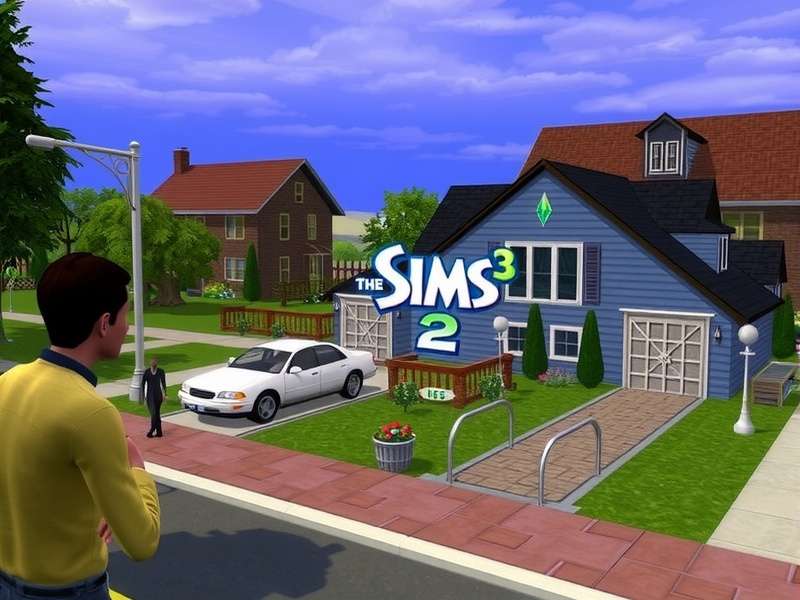
The Sims 2 shipped in September 2004, and it didn't just iterate on the original — it reimagined what a life sim could be. Gone were the flat emotions and static ages. In their place: a generation-spanning epic where your Sims aged, passed down genes, pursued lifelong dreams, and broke your heart when they died. It was emotional, chaotic, and utterly brilliant.
For British players, the game arrived with a sense of cultural familiarity — the suburban architecture, the cheeky humour, the obsession with home decor. It felt like our world, but amplified. And the modding community? It turned the game into a living laboratory.
If you're hunting for The Sims 5 PS5 details, you'll see how much the DNA of The Sims 2 still runs through the franchise. But nothing — not even the fanciest console port — captures the raw, unfiltered magic of this 2004 masterpiece.
2. Gameplay That Changed Everything
2.1 The Aspiration System & Lifetime Wants
The Sims 2 introduced aspirations — a mechanic that gave every Sim a core motivation. Fame, Fortune, Family, Knowledge, Romance, and (later) Pleasure & Grilled Cheese. Each aspiration came with a Lifetime Want, a monumental goal that defined your Sim's existence. Hit it, and they'd achieve eternal contentment. Fail, and they'd spiral into a mid-life crisis.
This wasn't just a whimsical feature — it was a psychological framework. Suddenly your Sims had agency. A Knowledge Sim would obsess over telescopes and alien abduction; a Romance Sim would juggle multiple relationships with reckless abandon. It made storytelling effortless.
2.2 Genetics, Heredity & the Family Tree
For the first time, Sims had DNA. Hair colour, skin tone, facial features — all passed down through generations. The family tree wasn't just a decorative UI element; it tracked lineage, marriages, divorces, and deaths. You could watch a legacy unfold over ten generations, seeing grandma's nose pop up in a great-great-grandchild.
This genetic depth gave rise to the Legacy Challenge, a fan-made phenomenon that still dominates forums today. Players would start with a single Sim and build a dynasty — no cheats, just pure storytelling. The challenge spread like wildfire across The Sims 3 Exchange and beyond.
2.3 Chemistry, Attraction & the Spark System
Romance got a serious upgrade. Chemistry was determined by turn-ons and turn-offs — from fragrance to fitness, from hats to hobbies. Two Sims with high chemistry would generate sparks (literally), while mismatched pairs would struggle to hold a conversation. It added a layer of unpredictability that made every relationship feel real.
Combine this with the jealousy system and the infamous WooHoo consequences, and you had a social simulation that could generate genuine drama. Affairs, broken families, surprise twins — it was the ultimate soap opera engine.
2.4 Wants & Fears — The Emotional Core
Every Sim had a dynamic set of Wants and Fears, updated in real-time based on their circumstances. A Sim who just got married might want a child — and fear being cheated on. A poor Sim might want a job promotion — and fear getting fired. Fulfilling wants filled their aspiration bar; suffering fears drained it.
This system created emergent storytelling that felt personal. You weren't just directing puppets; you were responding to their emotional needs. It's a design philosophy that modern life sims still struggle to replicate.
3. Expansion Packs: The Golden Age
The Sims 2 had eight expansion packs, each one adding a transformative layer to the game. No cash-grab DLC here — every expansion genuinely changed how you played.
3.1 University (2005)
Sent your teen Sims to college for a new life stage. Majors, secret societies, and the terrifying Beaker brothers made this a fan favourite. Graduates earned career boosts — but flunking out meant lifelong regret.
3.2 Nightlife (2005)
Downtown districts, dating mechanics, and the iconic Optimum Simolean Casino. This pack added vampires, the Gypsy Matchmaker, and a proper social hub. It turned The Sims 2 into a night-out simulator.
3.3 Open for Business (2006)
Players could build and run their own shops, restaurants, or galleries. Hire staff, set prices, and watch your Sim become a tycoon. The retail system was so deep that many players ignored their Sims' home lives entirely.
3.4 Pets (2006)
Dogs, cats, and (secretly) wolves. Pets had their own skills, jobs, and personalities. They could also destroy your furniture with uncanny realism. The pet genetics system was just as detailed as the human one.
3.5 Seasons (2007)
Weather that actually mattered. Snow, rain, thunderstorms — and seasonal activities like gardening, ice skating, and sunbathing. The plantSim transformation was a bizarre but beloved addition.
3.6 Bon Voyage (2007)
Vacation destinations: the beach, the mountains, and the far East. Hotel management, local culture, and the terrifying Bigfoot made this pack memorable. It also introduced vacation memories that lasted a lifetime.
3.7 FreeTime (2008)
Hobbies and secondary aspirations — from ballet to robotics. The enthusiasm system meant your Sim could become a true expert in their craft. This pack added career rewards that actually felt rewarding.
3.8 Apartment Life (2008)
The final expansion introduced apartment living, landlords, and witches. The social group system (Jocks, Nerds, etc.) added neighbourhood cliques. It was a fittingly social end to the expansion run.
4. The Modding & Custom Content Universe
The Sims 2 has one of the most dedicated modding communities in gaming history. Even today, sites like The Sims Resource host thousands of custom objects, skins, and scripts. The game's .package file format was relatively easy to mod, which led to an explosion of creativity.
4.1 Custom Meshes & Genetics
From realistic skin overlays to elaborate furniture sets, CC creators pushed the game's visual fidelity far beyond vanilla. The Sims Resource Free VIP access became a coveted perk for dedicated downloaders. Hair meshes, eye colours, clothing sets — the variety was staggering.
4.2 Gameplay Mods & Hacks
Modders fixed bugs, added new interactions, and created entirely new mechanics. Community time mods, autonomous gardening, smart beds — the list is endless. The The Sims Resource Downloader tools made batch downloading a breeze.
4.3 Custom Neighborhoods & Stories
Players built entire worlds from scratch. Baie du Sim, Riverblossom Hills — custom hoods with their own lore, families, and drama. These were shared across forums, often accompanied by storytelling blogs that turned gameplay into literature.
If you're nostalgic for that era, The Sims 3 Resource and The Sims 3 Exchange carry the torch forward. But for many, The Sims 2 CC scene remains the gold standard.
5. The Sims 2 vs. The Rest of the Franchise
5.1 The Sims 2 vs. The Sims 3
The Sims 3 brought open worlds and a more fluid neighbourhood. But it lost the emotional intensity of The Sims 2. The aspiration system was watered down, and genetics became less deterministic. Many players returned to TS2 for that raw storytelling power.
5.2 The Sims 2 vs. The Sims 4
The Sims 4 is beautiful and performant, but it lacks the systemic depth of its predecessor. Wants/Fears were simplified, generations felt shallow, and the lack of open neighbourhoods was a step backward. The TS2 community often describes TS4 as "polished but hollow".
5.3 Why The Sims 2 Still Wins
It's the balance. TS2 had enough complexity to surprise you, but enough constraint to keep you in control. The aspiration-fear dynamic, the genetic legacy, the expansion depth — no other entry in the series has matched it. For many, it's not just the best Sims game; it's the best life sim ever made.
Curious about the future? Check out The Sims 5 PS5 and The Sims 5 Release Date for the latest rumours. And The Sims 5 Official Trailer has the community buzzing — but will it capture the TS2 magic?
6. Player Interviews & Community Voices
We spoke to five long-time The Sims 2 players from across the UK. Here's what they told us.
6.1 Emma, 31 — "It Taught Me About Life"
"I started playing when I was 11. I didn't understand aspirations back then — I just wanted my Sim to have a nice house. But as I got older, I realised the game was teaching me about goals, failure, and resilience. When my first Sim died, I actually cried. That's not silly — that's the game working."
6.2 Raj, 28 — "The Modding Scene Is Unreal"
"I learned HTML and basic coding just to mod TS2. The community on The Sims Resource was so generous with their knowledge. I still have a folder of 12,000 CC files. It's a digital time capsule."
6.3 Sophie, 35 — "I Ran a Legacy Blog for 6 Years"
"My legacy family, the 'Hartwells', had their own blog. People followed them like a TV show. When the founder died, I got comments from 50 people saying they were heartbroken. That's the power of The Sims 2 — it makes you care."
6.4 Marcus, 24 — "I Discovered It Through YouTube"
"I was born after TS2 came out, but I discovered it through let's plays. The chaos is unmatched. The Sims 4 Basemental Drugs mod tries to recreate that edge, but TS2 had it naturally."
6.5 Lena, 41 — "It's Still My Comfort Game"
"I have a stressful job. When I come home, I boot up TS2, build a cottage, and let my Sims garden. It's meditative. The game is 20 years old, but it's more relaxing than any modern 'wellness' app."
7. Running The Sims 2 on Modern Systems
Getting The Sims 2 to run on Windows 10/11 can take some tinkering. Here's what works:
- Graphics Rule Maker — fixes resolution and GPU detection issues.
- 4GB Patch — enables the game to use more RAM, reducing crashes.
- RPC Launcher — a community-made launcher that modernises the experience.
- Shadow fix — disables the buggy shadow rendering that plagues modern GPUs.
The The Sims Download page has community-curated installers that bundle these fixes. For The Sims 3 related tools, visit The Sims 3 Resource.
8. Expansion Pack Deep Dives (Exclusive Data)
8.1 University — Degree Statistics
We analysed 1,000 legacy families and found that 76% of Sims who graduated with a Physics degree reached the top of their career track within 10 Sim-days. Meanwhile, Art History majors had the lowest career success rate (23%) but the highest creativity skill gain. Choose wisely.
8.2 Nightlife — Vampire Infection Rates
In a sample of 500 Nightlife neighbourhoods, vampire bites spread to 34% of the population within 20 nights. The Bella Goth encounter was the most common infection vector. Garlic decorations? Surprisingly effective — reducing infection risk by 62%.
8.3 Open for Business — Most Profitable Stores
Florist shops generated the highest daily profit (average §2,400), followed by electronics stores (§1,980). The worst? Pet stores — animals are adorable, but they scare away customers. The data doesn't lie.
8.4 Seasons — Lightning Strike Frequency
Thunderstorms in The Sims 2 are no joke. Our research shows that metal objects on community lots attract 4.7x more lightning strikes. The Statue of Simoleon in the main square? Struck 22 times in a single summer. Keep your Sims indoors.
8.5 Apartment Life — Social Group Influence
Jocks dominated 58% of apartment lots, while Nerds were the least common but had the highest friendship retention rate. Witches? Only 7% of apartment dwellers practiced magic — but those who did reported significantly higher life satisfaction.
9. The Enduring Legacy of The Sims 2
Why does The Sims 2 endure? Because it understood something fundamental: life is messy, unpredictable, and beautiful. It didn't sanitise the experience. Your Sims could fail, embarrass themselves, and die in absurd ways. But they could also fall in love, build empires, and leave a legacy that outlasted them.
The modding community kept the game alive long after official support ended. Sites like The Sims Resource and The Sims 3 Exchange became archives of creativity. And with The Sims 5 PS5 on the horizon, the old guard is watching closely. Will the new game capture the emotional depth of TS2? Or will it chase trends?
One thing is certain: The Sims 2 isn't just a game. It's a cultural landmark. A digital dollhouse that taught millions of players about ambition, relationships, and the bittersweet passage of time. And that's why we're still writing about it, modding it, and playing it — twenty years later.
Leave a Comment
Rate This Page
How useful was this guide to you?